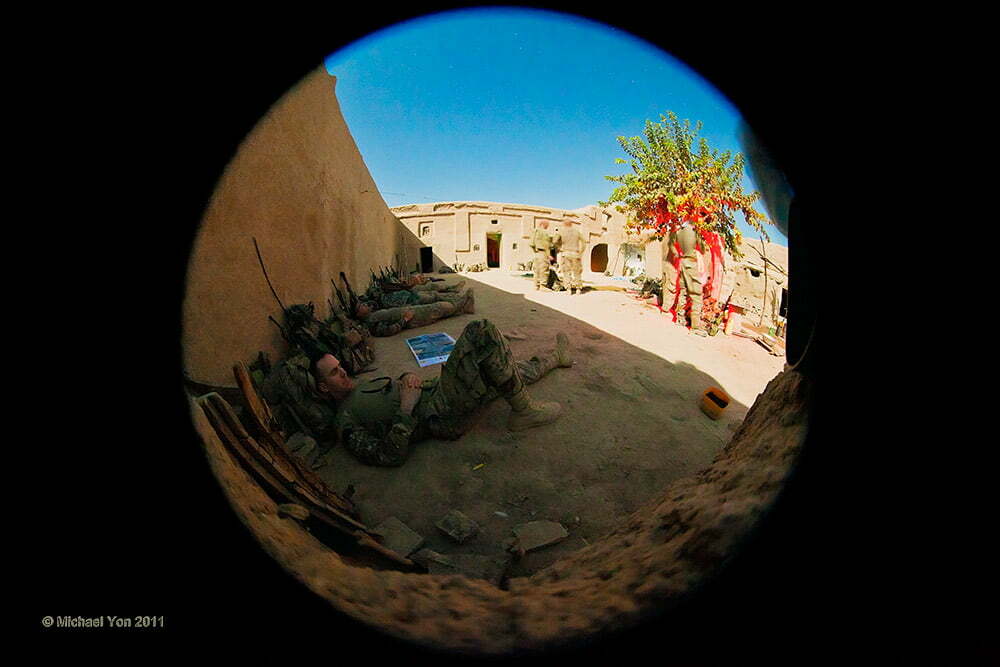

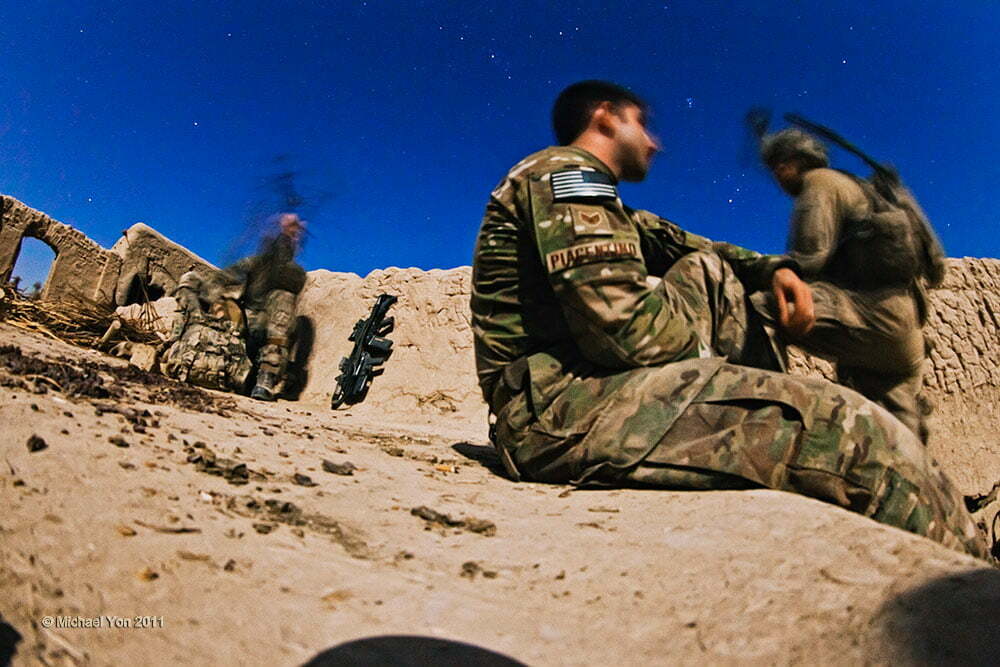
Trouble with comms. More experimentation with the antenna.
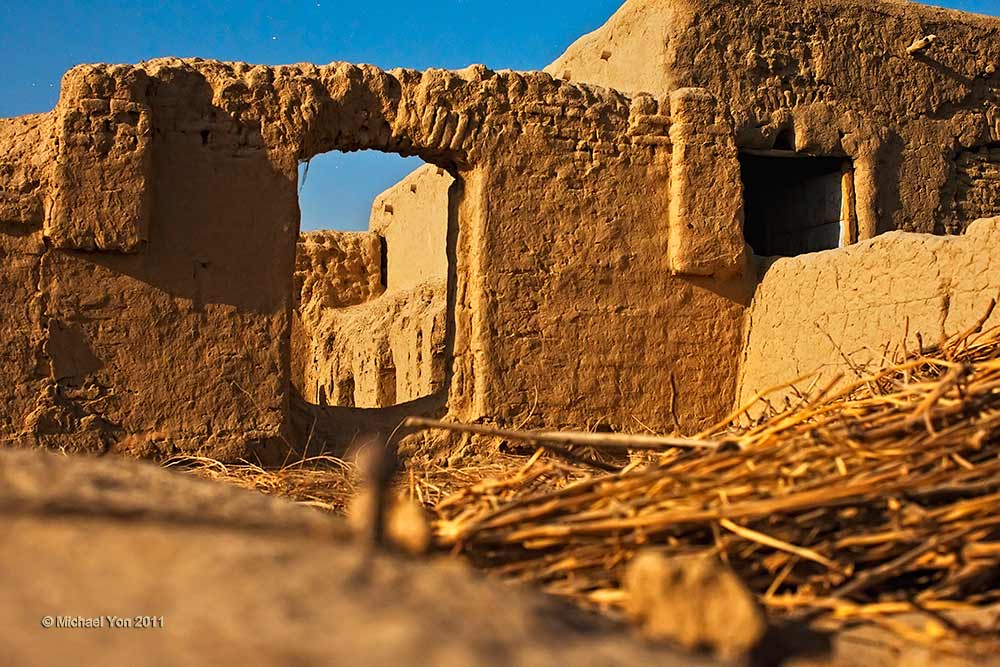
The roof.
Two Soldiers are on watch through that door, and it might be tempting to just walk over these drying poppy stalks and go see them. But in Afghanistan every step is bound to be your last. The straw on the other side of the opium poppy is merely a thin, thatched roof, but it’s not obvious. One step and you would plummet into the small room below, where the FET (Female Engagement Team) was in abode. One small step for a man likely would result in the need for Dustoff for a couple of people.
It’s funny how often that I’ve written about women going on serious combat missions and getting into the middle of firefights, yet many Americans still believe that women don’t go into combat. Or they are not “in” the combat unit. It’s a silly thought. When bullets start flying, it doesn’t matter what patch they wear.
One must wonder how many troops have fallen through roofs, or into unmarked water wells. Some wells are very deep and equally sudden. Just a hole in the ground. No bucket hanging from a pole. No bricks surrounding it. Afghan wells can be up to hundreds of feet deep. Retrieving a limp body would be a chore.
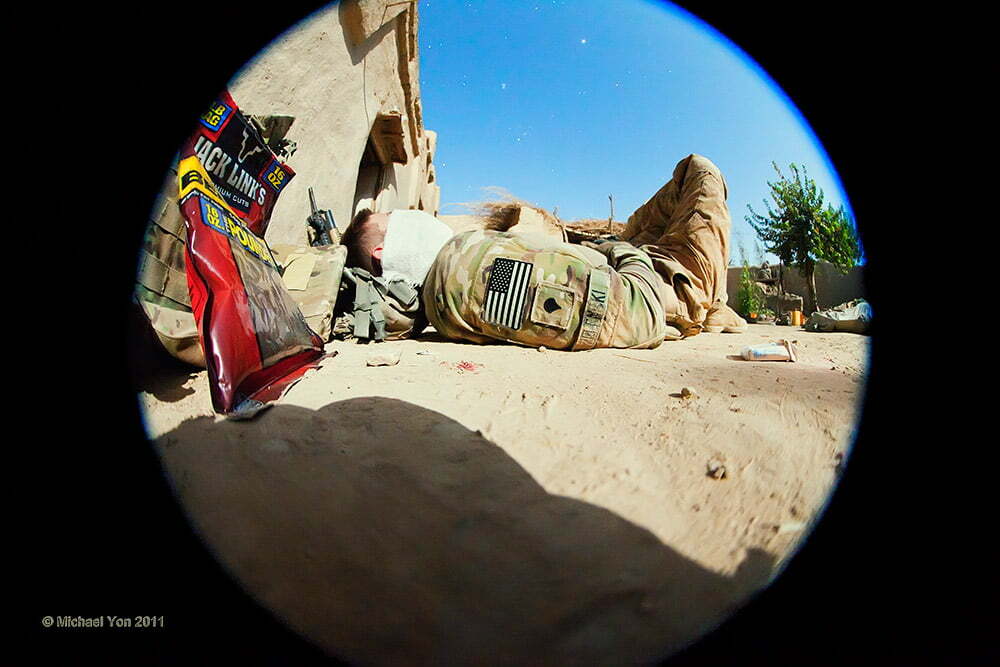
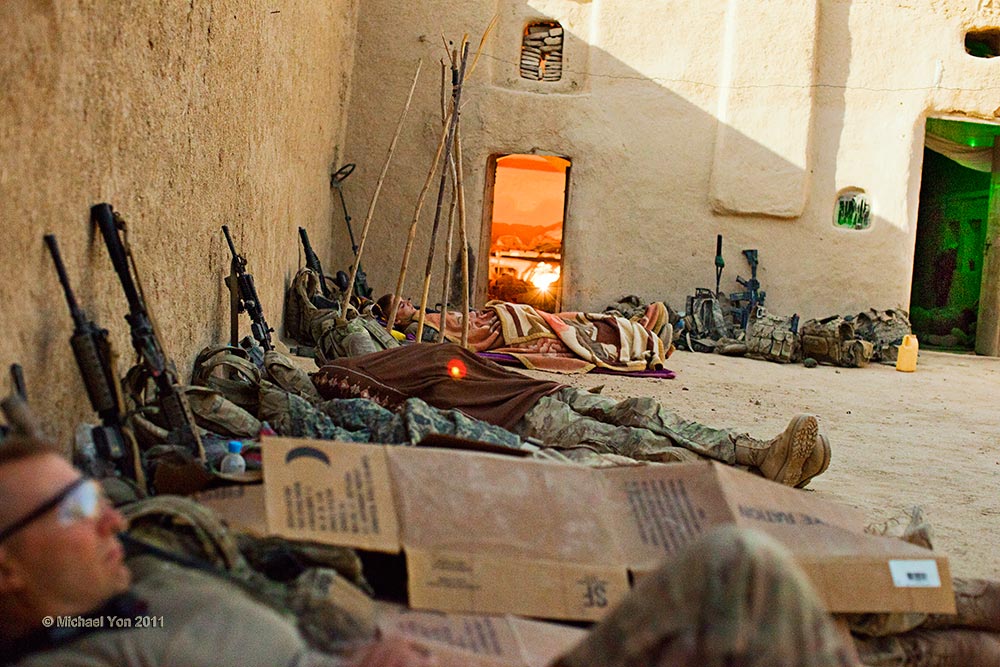
On the ground, the Soldiers sleep, the moon so bright that “Z” covers his eyes.
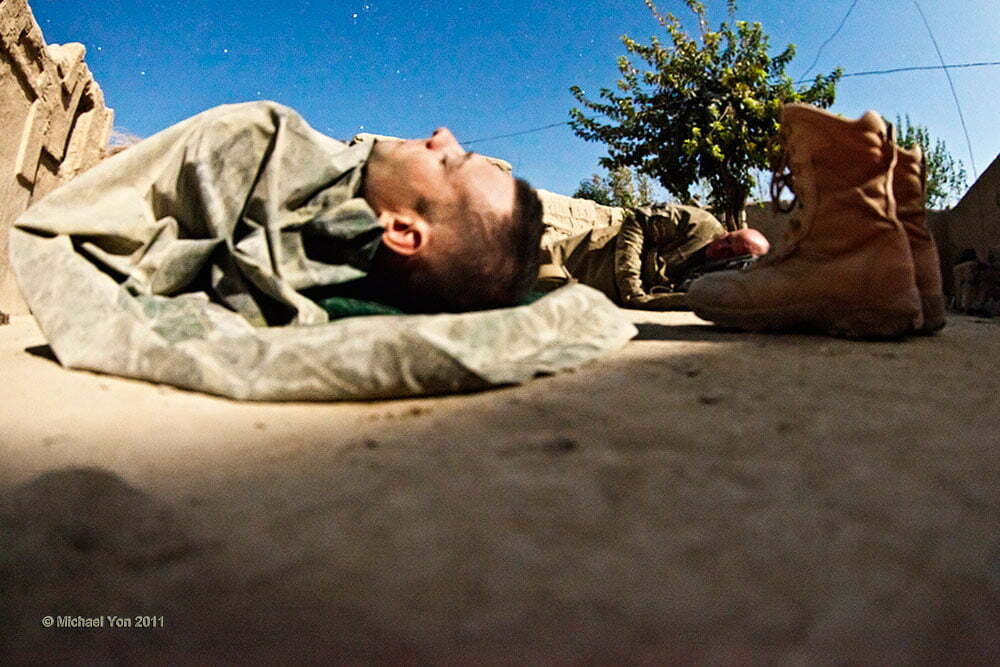
Second by second, earth and bodies radiate heat into space and the warm night has become cool, and then chilly.
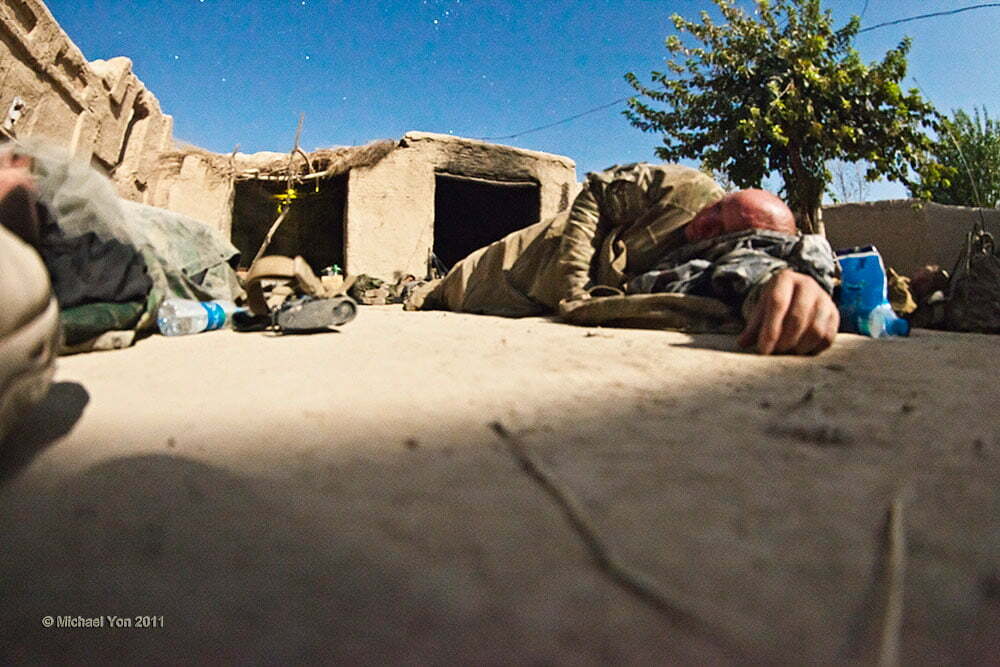
Just now, Terry Taliban was probably sleeping.
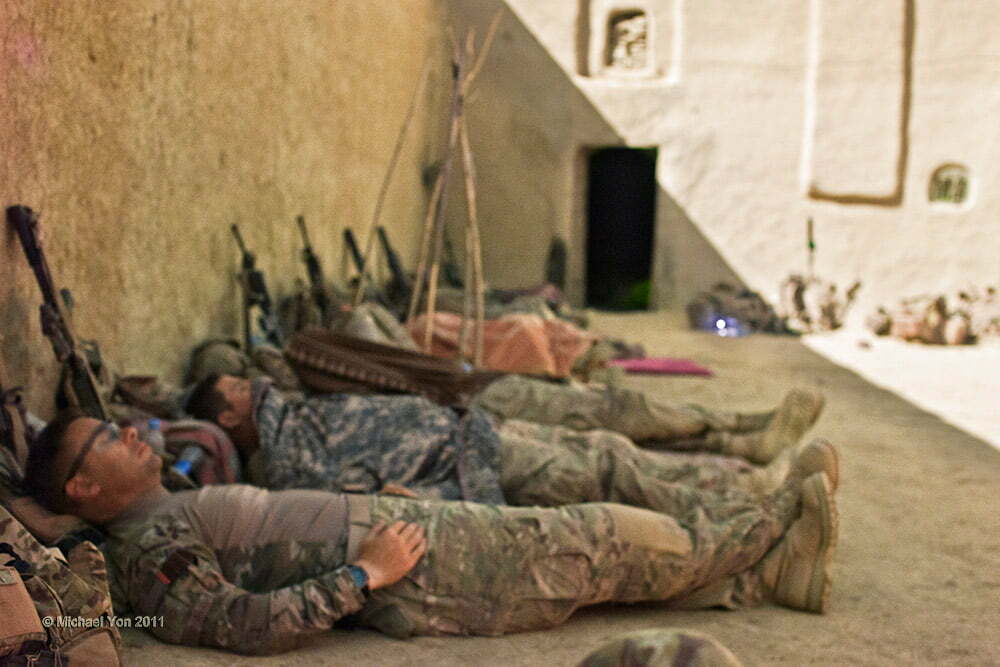
That’s the 4-4 Cav squadron commander, LTC Mike Katona. Most everyone sleeps on the ground here. I slept on the roof.
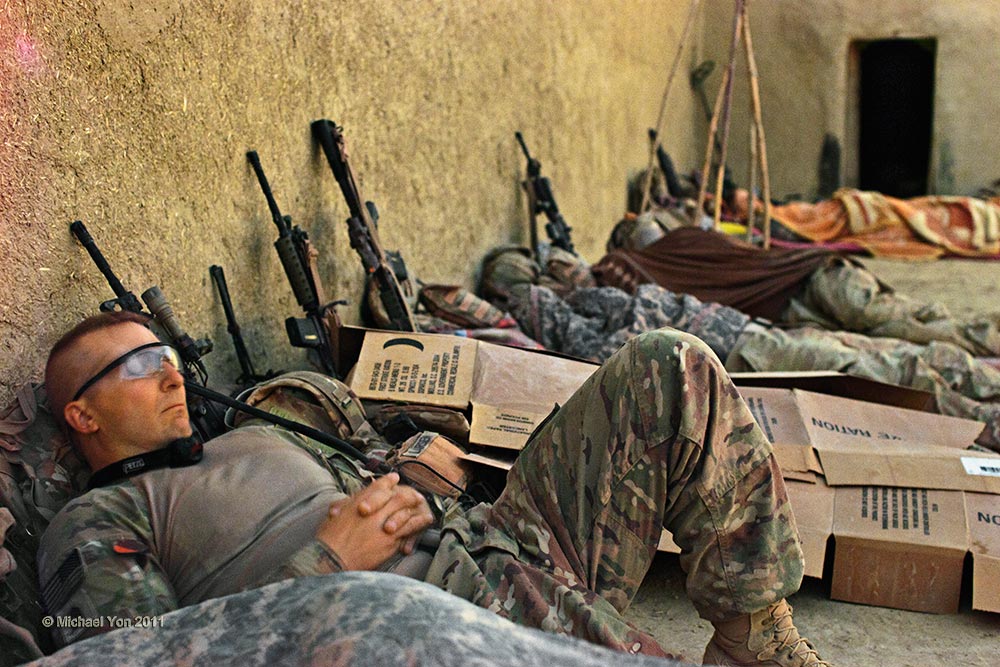
Sergeant Major Greg Larsen is the Operations Sergeant Major. As the night became more chilly, a few Soldiers used “Central Park blankets” and pulled under cardboard from MRE boxes. LTC Katona went the Central Park route. During other missions, they’ve slept in body bags.
The red tab on the Sergeant Major’s sleeve is a tourniquet in his pocket. All Soldiers in Task Force Spartan carry a tourniquet here. Oftentimes, several tourniquets are needed for one patient. It’s crucial to have them quickly available. I wonder how many lives have been saved by this simple policy.
The camera is steadied on the mud chicken coop.
Other Soldiers sleep inside the rooms where it’s warmer, nastier, and safer from grenade or other attacks. These men know combat. Many have already done multiple tours here and in Iraq. You can’t swing a cat without hitting someone who has a Purple Heart.
Purple Hearts and medals can create weird dynamics. Purple Hearts are awarded for wounds received in combat. Some guys don’t care about medals, but a few want every medal they can get. I’ve seen a lot of troops turn down Purple Hearts. They do this especially in units in heavy combat and their reasoning is always the same: I wasn’t hurt bad enough, so I didn’t deserve it. It would be embarrassing for them to take it.
I know many people with Purple Hearts, and at least two of my friends turned them down. I believe both have two Purple Hearts each, but turned down a third. One friend was a lieutenant colonel and the other an E4. Same reason: The E4 was embarrassed because they were in a firefight and he got wounded by a vehicle. He said it was his fault, so he didn’t want the Purple Heart. He said he didn’t want to go through life explaining in shame how he got that one. He really deserved it, but he was embarrassed and so that’s how it went.
The lieutenant colonel got shot in the hand but it was minor and so he didn’t want it. In other units, you see troops who think they should get a Purple Heart for a bee sting. There may be a little exaggeration there, but not much. Anyway, unless you turn it down, you automatically get a Purple Heart when you get wounded in combat. It could be a very minor wound for which you don’t miss an hour of duty, or it could be massive wounding. The Purple Heart is the same.
Medals are a different story. When the military is not in big wars, if they get into a minor clash like Grenada, medals seem to rain from the sky. But if you get in a serious war situation like at times in Iraq and Afghanistan, where firefights can occur many times per day (as in this unit), lots of medals still are awarded but you don’t get them just for showing up.
The medals depend on the unit, too. One guy in a non-combat unit might get a Bronze Star with V (valor) for actions that a troop in a combat unit would not even get a pat on the back. You can often sense the guys who got medals for nothing because they can’t stop bragging about them. They can also cause friction because if ten guys are in the same fight, and all did equally well, and one guy gets a big medal and the others don’t, jealousy can rear its head. Not always, but it happens from time to time.
Medals also create a weird dynamic for numerous reasons. For instance, awards go toward promotions, so there are financial and career incentives. In Iraq, you would see a bunch of guys in the same fight, doing the exact same stuff, and the higher-ranking people would get the higher medals. If you put everyone in for big medals, even if they all deserved them (often the case), they likely all will get turned down. And so one Special Forces team told me that they rotated who got medals so that it would be fair. That might sound hokey, and on one level it is, but on another level it more reflects the reality that everyone is fighting all the time.
Usually we think of medals for one heroic act, but in reality just going on mission after mission is a serious act in itself, even if the trooper never did anything particularly special other than shoot at bad guys.
We’ve all heard stories about guys claiming to have a Medal of Honor and it turns out to be fake. Often these guys were never in the military, but less known is that a good number of people on active duty will flaunt medals they never earned, or they might wear a Ranger tab on their sleeve never having gone to Ranger school. Sometimes they do it for years before being caught. Some probably have gone their entire life without being caught. But the one surefire clue that the medal is fake, or at least the circumstances are overblown, is when the guy keeps pointing out how he got the medal.
Everyone has lost friends and many have held them in their arms as they died, or carried them under fire through the swirling dust to a roaring helicopter. Many of these men have not seen just a fight or two; they’ve seen hundreds of firefights and bombs. Some have seen more than hundreds. It’s a safe bet that half the men in this photograph have been wounded. They’ve been shot, blown up, hit with shrapnel. Sometimes they don’t get a scar. Troops often get shot in the helmet and they usually get knocked out. If you get hit in the body armor by an AK-bullet, the bullet won’t go through a plate but you are going down and your ribs might be broken.
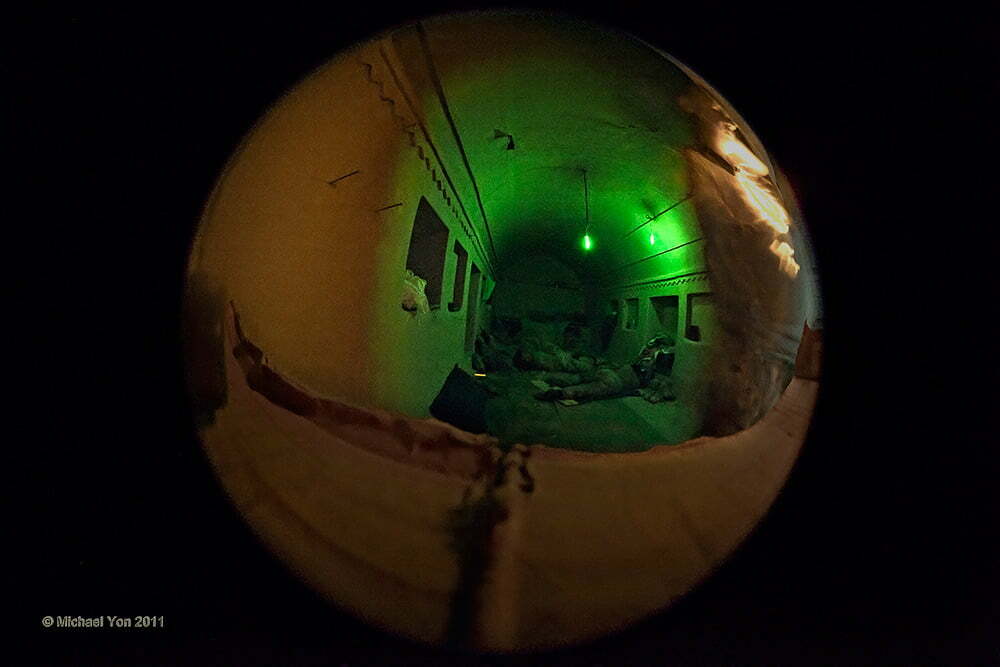
Soldiers use chemlights as nightlights. The troops in here are safer and warmer, but the floor and walls are unwashed by the sun. The air is dank and smells of barnyard.
There is no electricity. In many homes, nothing is present that uses electricity. No radios, no flashlights. Other times there might be a battery-operated clock. Mobile phones can be charged on motorbikes. Even the wheel has come to many villages during living memory of older Afghans.
On the mud walls, often there will be photographs or small posters from afar, of places like Hawaii or a big city in America or Europe.


No comment yet, add your voice below!