

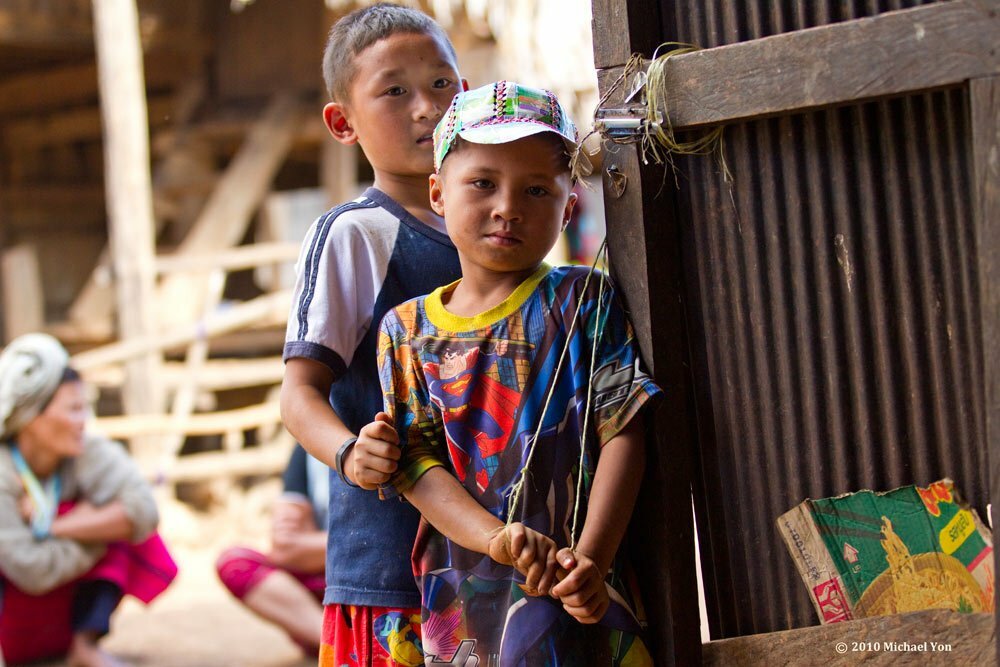
The local school has two teachers and about fifty students.
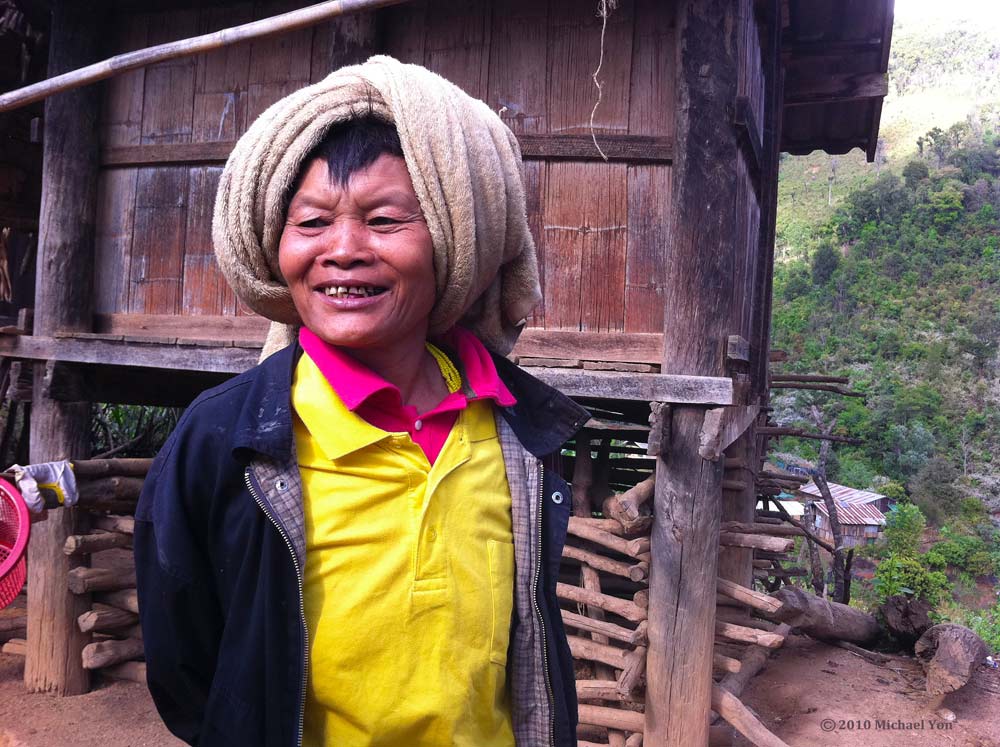
They rarely see any farangs (foreigners), and not even many Thais come out, and no tourists.· I asked if they would mind if tourists visit.· The villagers were excited and said a big thank you that I would tell others it’s okay to come.
So then the villagers started explaining about neat things to see, such as a “giant waterfall” and a deep cave, neither of which did I have time to check out.· The mountains here did not seem big enough for a giant waterfall, but then my ideas of giant waterfalls come from the Himalaya.
They said the cave is about 40m wide and 100m deep, but I had the impression they didn’t know surely.· I tried to pry out more information about the cave, but sounds like they don’t venture down.· In any case, they were excited about the prospects of tourists and said visitors can learn how to feed and take care of elephants, and go riding and learn how to be an actual kwan chang (mahout).·· I would suggest travelers think that offer through before trying.· Kwan changs get flattened now and then.· I asked if the elephants are ever naughty or drink lao cao (rice whiskey), and they laughed at the question and I said, “Hey, Indian elephants drink it!”· They said the elephants are not naughty and also don’t drink lao cao.
But they said if you want to come visit and learn about the Karen lifestyle, please call the village chief (and they pointed to his house but he was gone to town).· The chief is Mr. Pakeur and his cell is 08-6913-1951, but to questionable avail because cell phones don’t work here!
A note on cell phones in remote places:· your cell might not work, but if you stop and ask the villagers in Thailand or in Nepal, they seem to have worked out every tiny patch of earth where a cell will work.· For instance, one Nepalese village had a piece of bamboo staked in the ground.· It was the only place where you could get a signal in the entire village, and so you had to stand next to that bamboo to talk.· The owner of the nearby house kept his phone atop the bamboo so people could call in.· And so it was true with this village.· They had found an area where the phones worked.
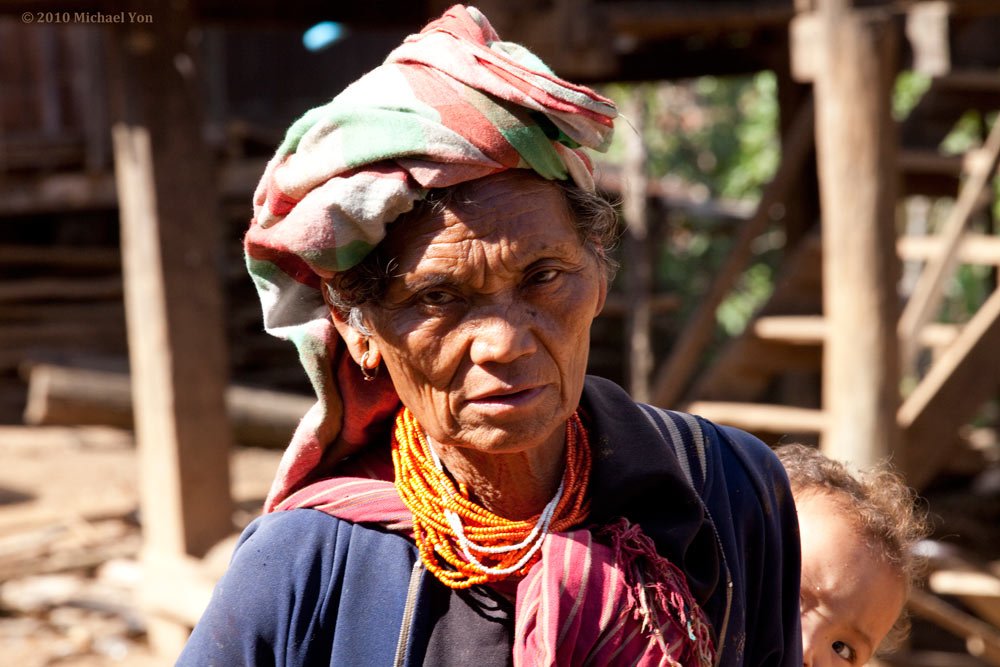
There are no hotels but the villagers said you can stay in their homes for about 1,000 baht/night.· (About $33.)· Again, they were clueless and just threw a number out there.· That price would be negotiable and my guess is that 200 baht a night would actually leave people pretty happy.
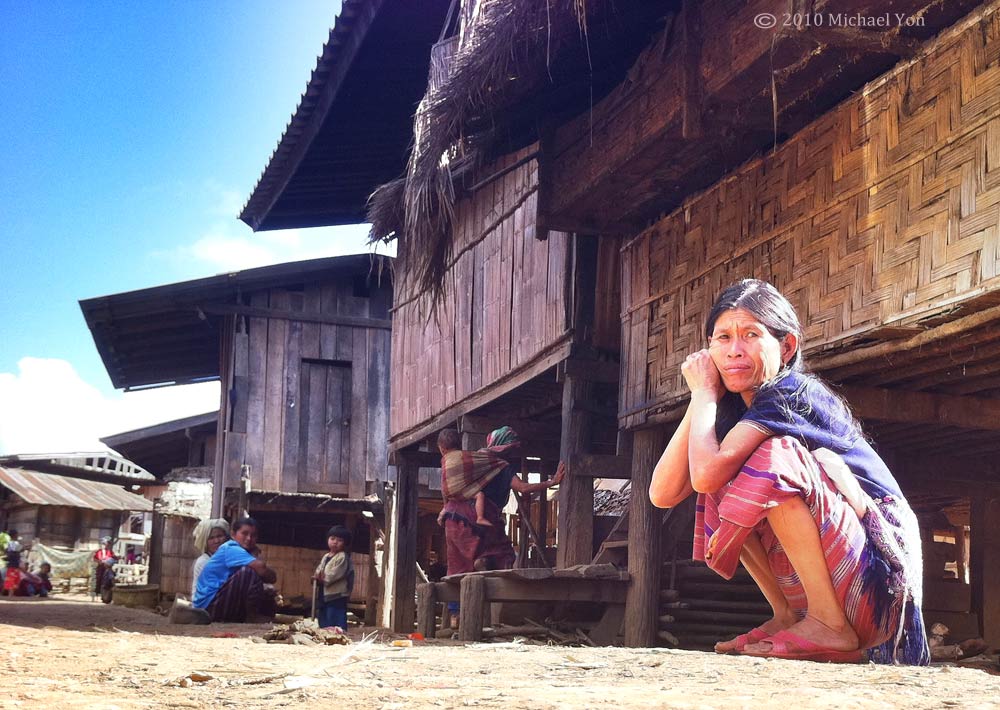
They are Christians and have a church.· At some point they had a farang preacher but now the preacher is a local.· I asked if they still sacrifice animals for the ghosts and their old traditions, and Mr. Maearhae said yes, but now only once per year.· They sacrifice a wild pig.· Does not matter if it’s male or female and they do the sacrifice at around New Years time.· (Different peoples have different New Years Days, but they were talking about the same New Years the “mainstream” world uses.)
The villagers were not so hot on time: Mr. Maearhae didn’t know how old he was, but he put out a number (58), which I think he made up.· He didn’t know his birthday but said the kids know their birthdays.· You’ll see the same in many places such as Nepal or Afghanistan, and it’s places like this that remind you how long progress will take in Afghanistan.· Thailand is a very rich country (though it’s hard to convince Thais of that), with a strong government, and yet it’s still very difficult to help raise people out of the jungle life, though Thailand is doing it slowly but surely.·· Some anthropologists may be unhappy with this idea of “raising people up,” but one of the alternatives here is that they were raising opium, and so it was that or more war.
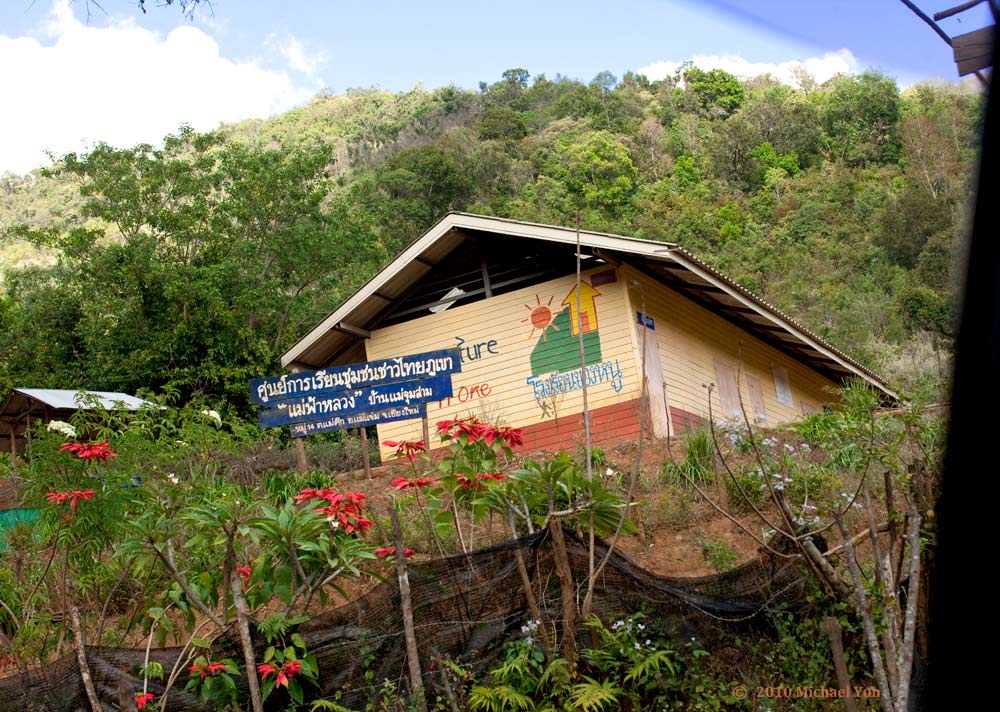
After we talked and the villagers fed us, it was time to see the elephant twins in the jungle.·· We loaded up with Mr. Maearhae and drove first to a nearby village to get his friend Mr. Kupor, who is “part owner” of the elephants.· I never worked out the details of the ownership part even after having asked about ten different times.· In any case, they said there are 13 elephants in total with 4 babies, including the twins, and so that makes 9 adults.· We passed by the schoolhouse on the way.


No comment yet, add your voice below!