

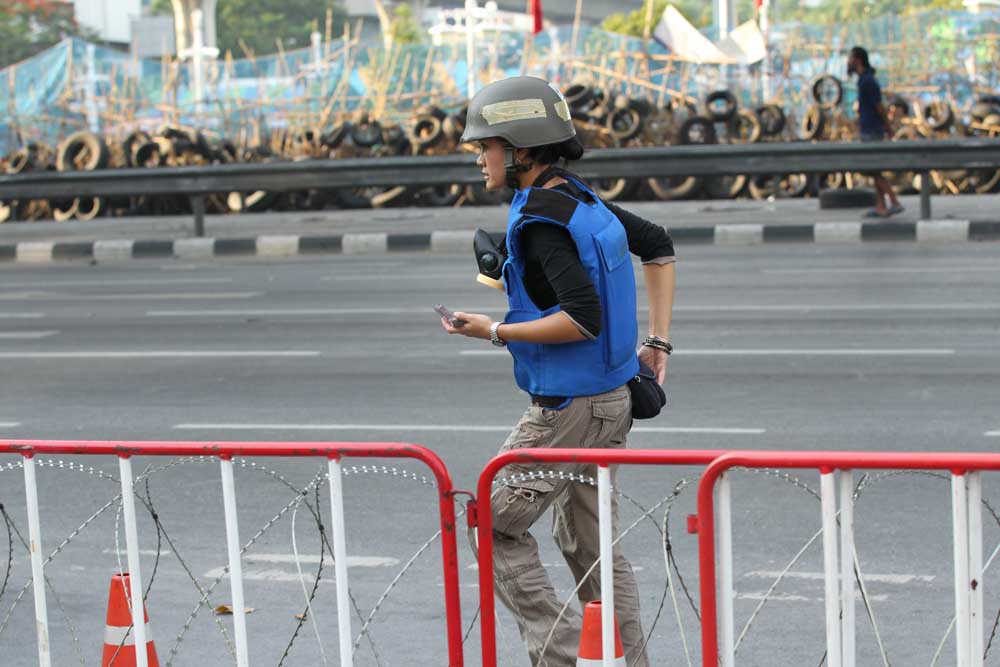
Rama IV road just near Lumpini Park.
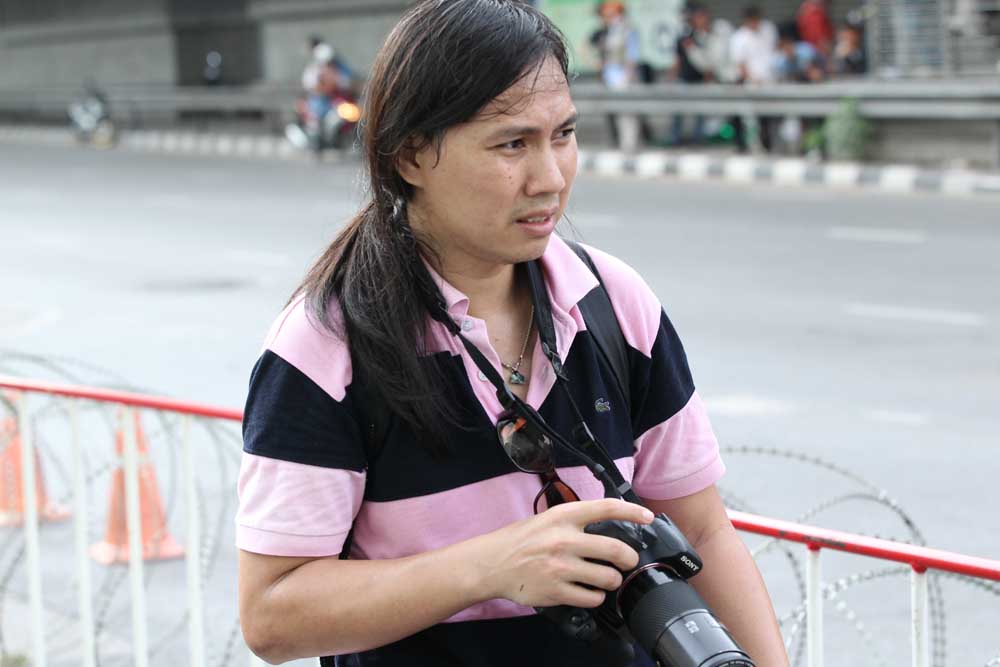
Skirmishes happened in many places over a period of weeks. I was there only about ten days. My guess was that freelancers and those from small companies were mostly without body armor.
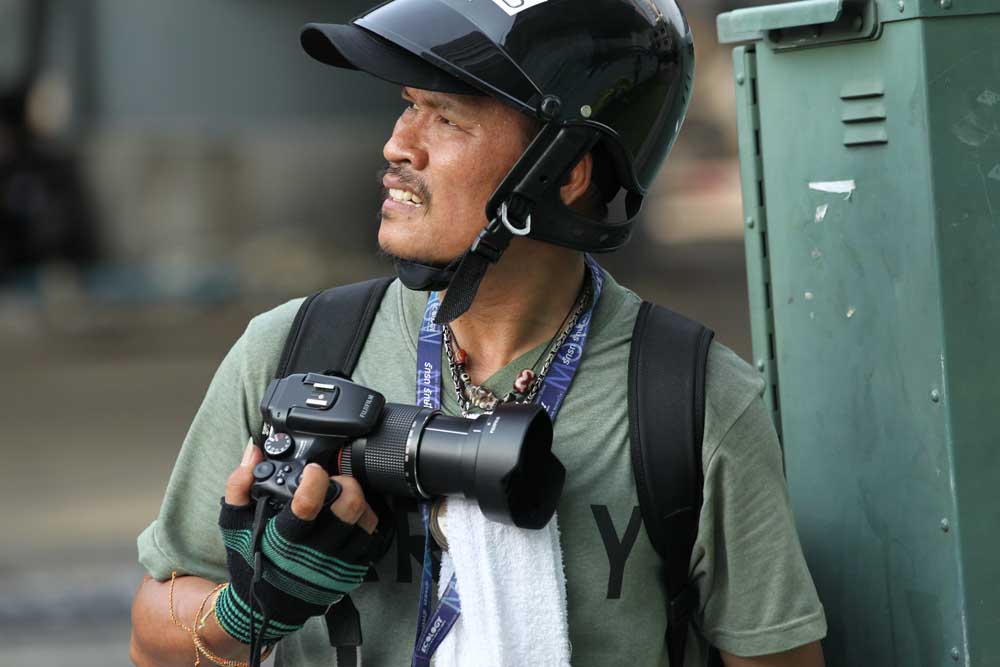
After bullets started flying, numerous journalists at different times sought cover behind this green box.
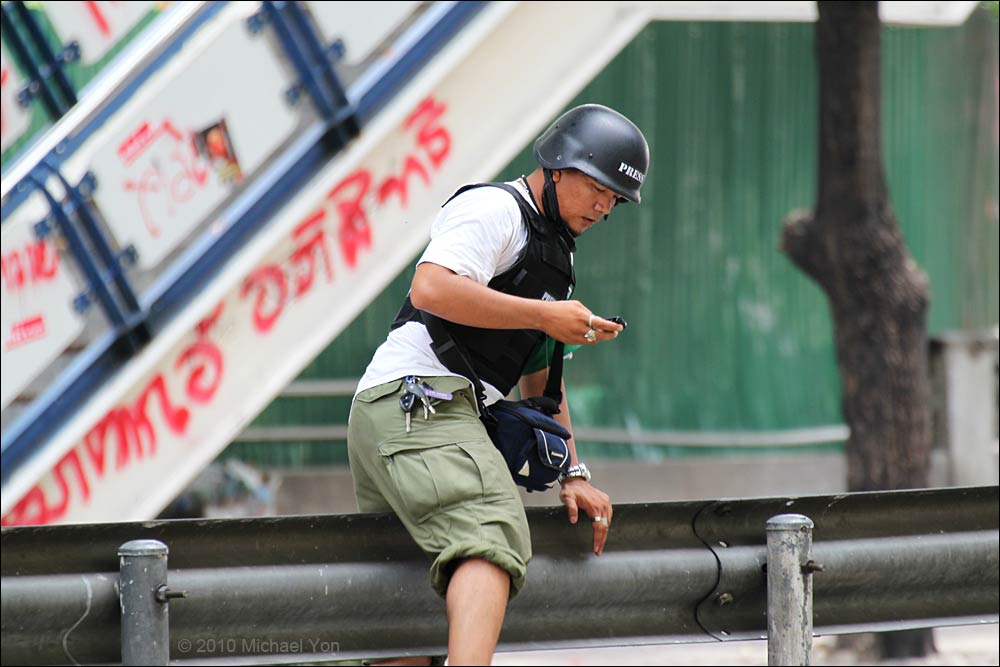
Most amazing is how quickly information was flowing. Every decent phone is a camera. Facebook. Twitter. Real-time vignettes flew around the world far faster than bullets.
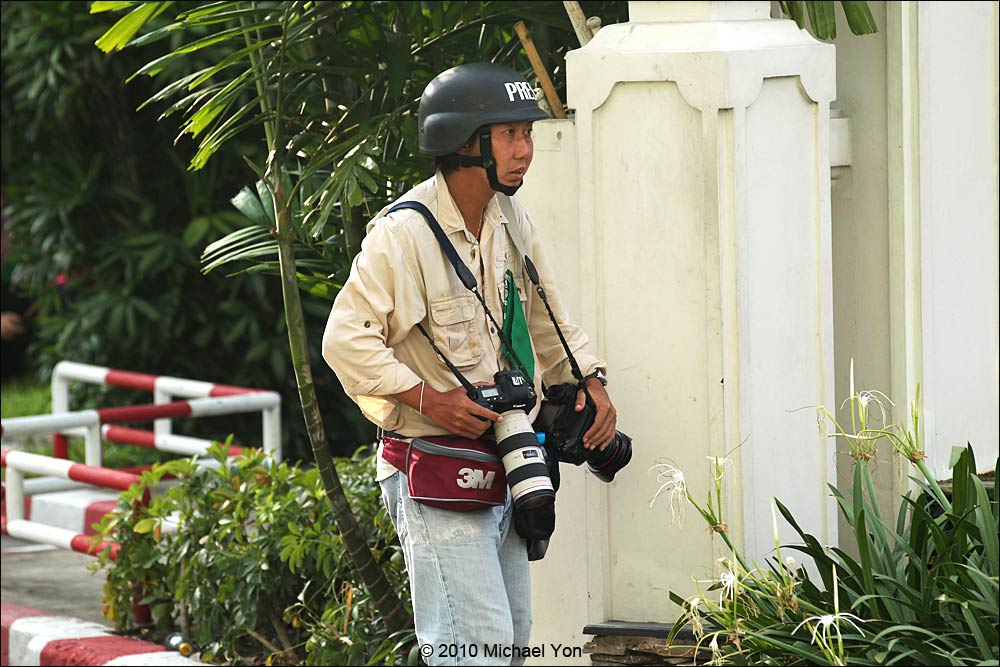
With war reporting, the danger levels usually go like this: Most dangerous is video work. Second is still photography. Third is writing. Safest might be painting: I say this because a famous British fine artist once painted soldiers straight off my photos — without my knowledge or authorization — indicating she had been in battles she had never seen. She was making gobs of money in a London art gallery while getting significant international press, all while pretending to have been there. (Amazing that a famous painter would rip-off an internationally known photographer apparently while expecting to not get caught.)
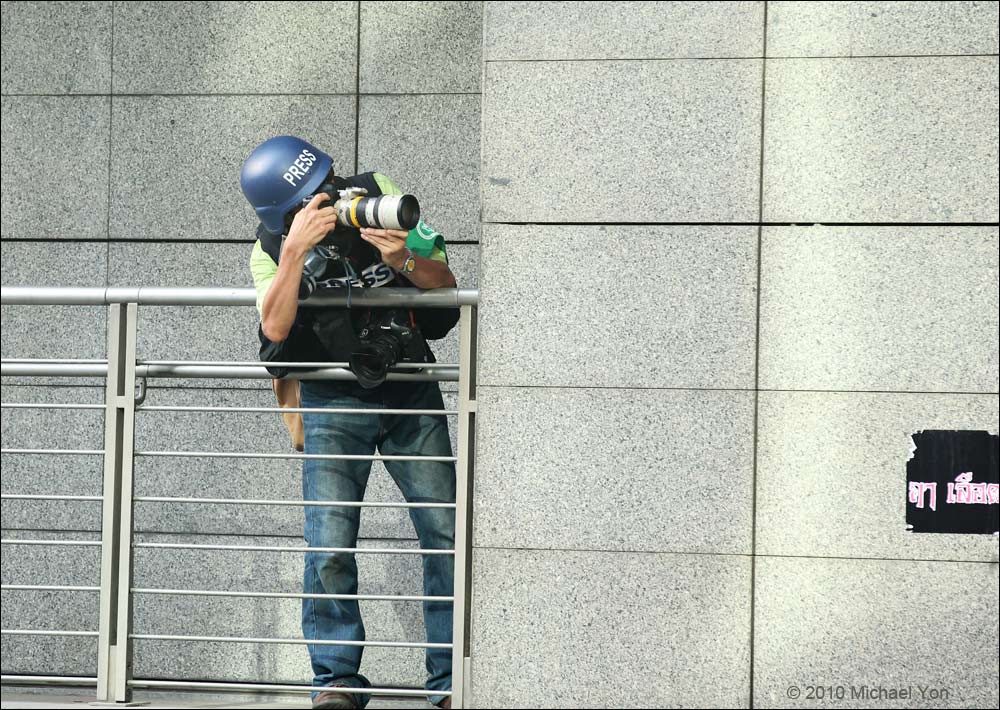
With still photography you can, at times at least, reach around and get a quick shot. But there are those pesky rules of combat: if you can see them, they can see you. If you can hit them, they can hit you.
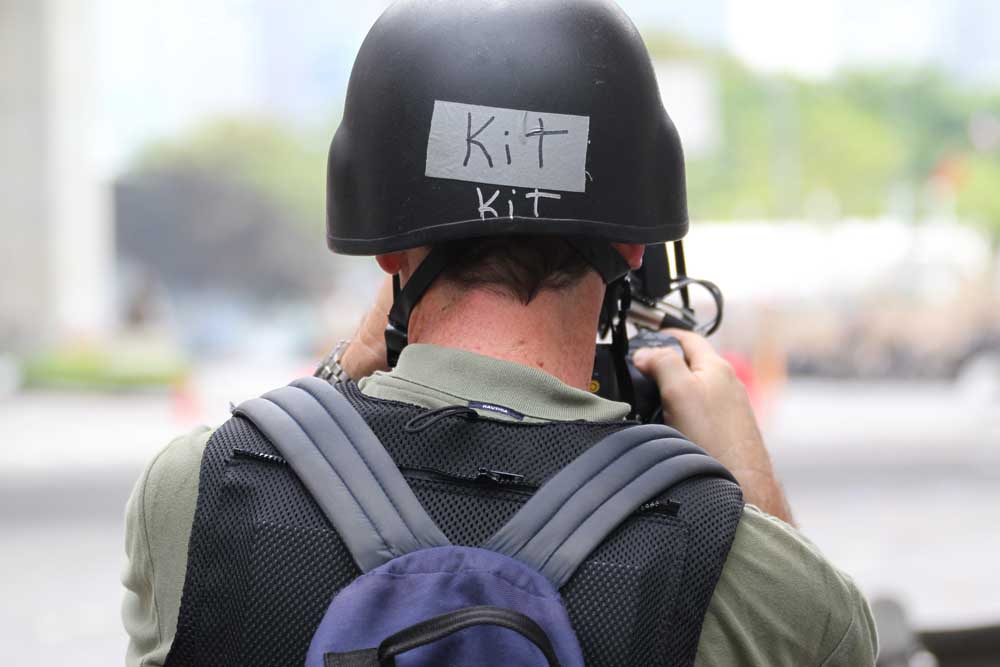
With video, the gear often is bigger and it takes longer to get good shots. Worse still, the shooter must focus more on the camera.
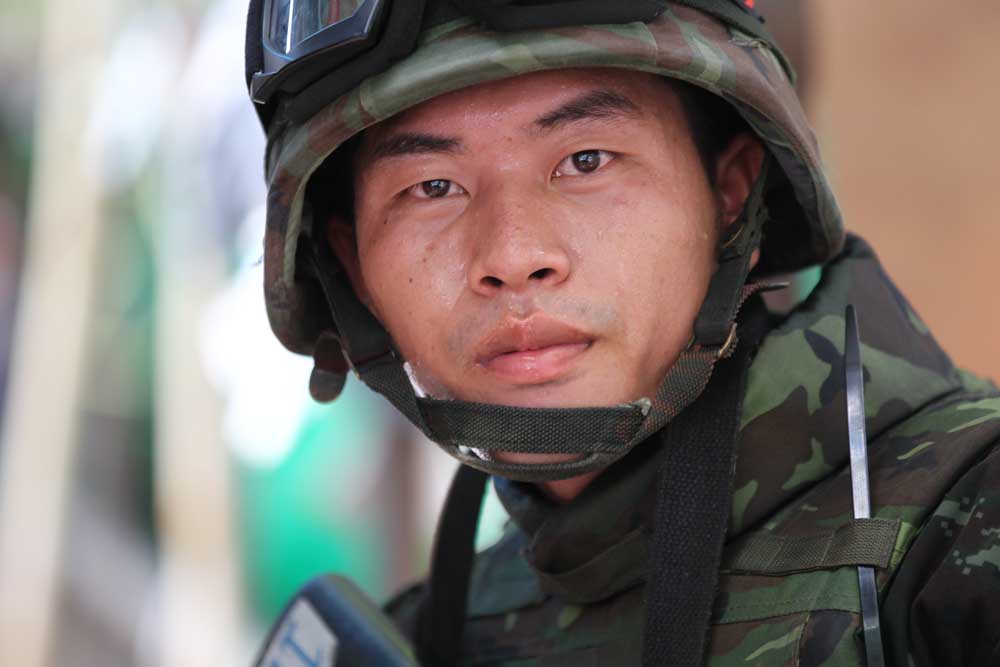
Soldiers only have to focus on the environment. Interestingly, as a writer, if you talk “too much” with soldiers or government officials, you’ll likely be called a pawn or a stooge, but if you hang out with arsonists you might be called an intrepid researcher.


No comment yet, add your voice below!