

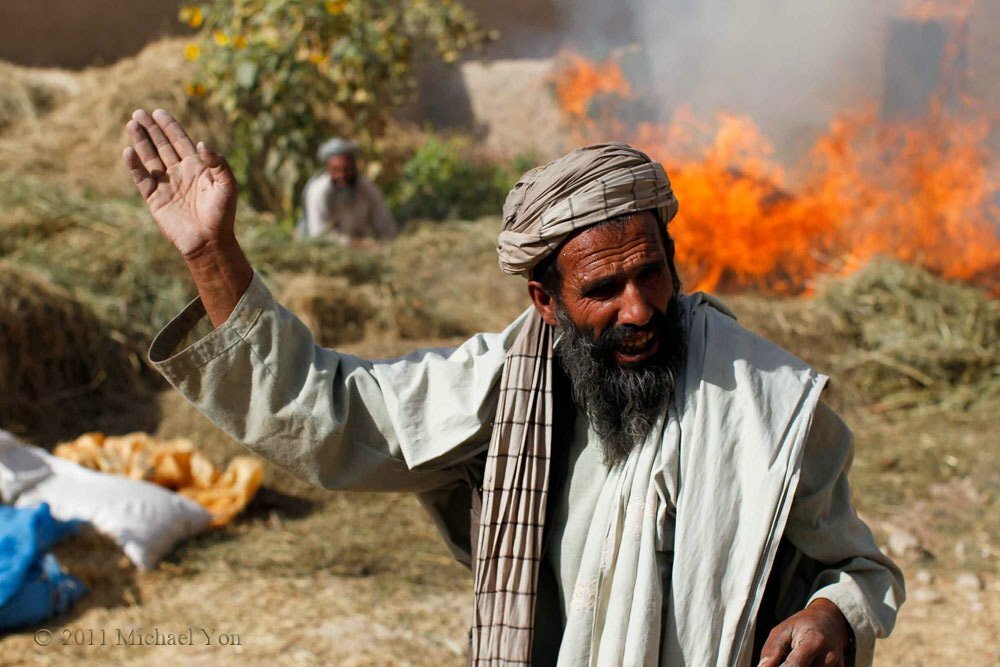
 During a firefight, an enemy tracer ricocheted into the compound we were in, and set this man’s hay ablaze. The farmers worked to extinguish the blaze.
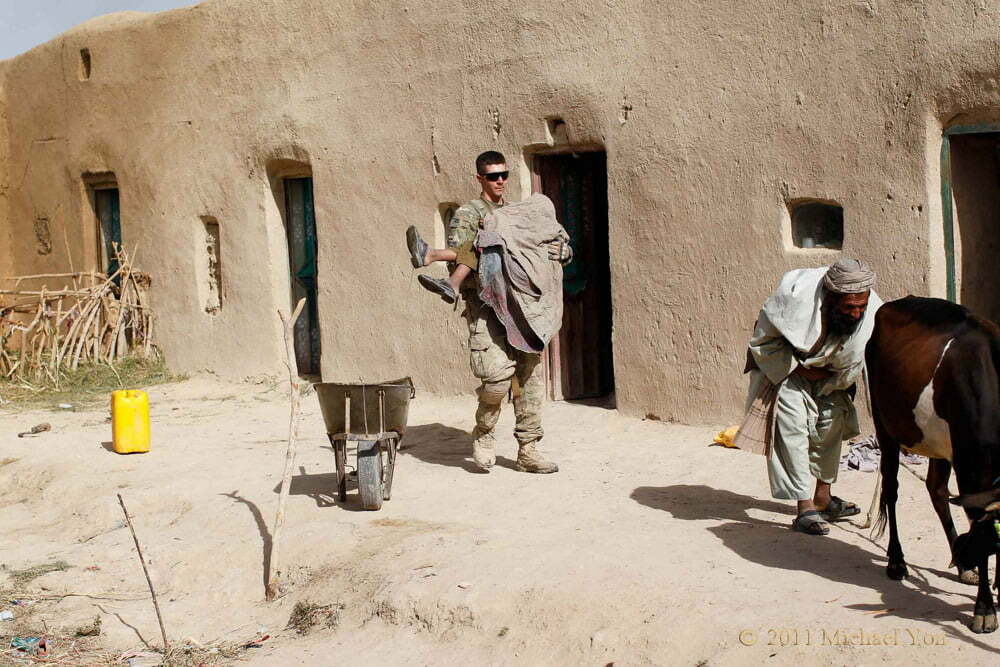 After the fire started, this Soldier saved this child. The boy had hidden in a building from the fire or the firefight, and likely would have died from smoke inhalation. This Soldier saw the problem and took action.
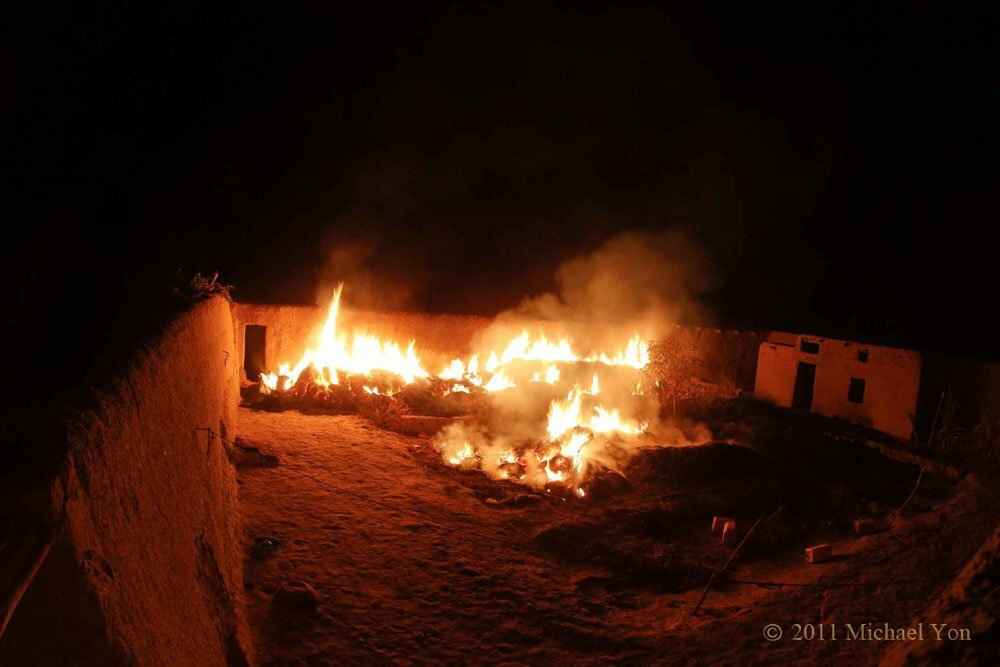 That night, the fire rekindled and destroyed all the hay. We were surrounded by spoor, and followed none.
With what the British Army combat tracking school taught me in only three weeks, it was frustrating that we were not tracking down and killing these Taliban. We did get at least one kill the day the hay burned, courtesy of the Air Force.
A Predator was covering us and spotted an enemy. I heard the Hellfire shot but did not see it until back on base, where I saw the video.
The Taliban target heard the Hellfire launch. He bolted like a deer. He was jumping the string.
Normally, after you see them bolt, they have seven or eight seconds to live. The Hellfire launch is loud. The missile climbs, arcs, and dives to the target, so the sound gets there long before the missile.
The Air Force keeps the laser on him. The man was running and then took a direct Hellfire shot.
To avoid being killed in Hellfire strikes, the enemy uses the same method that is used in anti-tracking. They “bombshell.” They did this often in Iraq, and so our people found ways around it. This has been a normal enemy combat drill in Afghanistan for at least three years when I first saw it there.
The Hellfire is not powerful. It is like a gigantic hand grenade, laser guided. So the enemy bombshells and everyone runs in different directions.
Dropping flat is great during small-arms contacts, but in a Hellfire strike you must RUN. Laying flat means a Hellfire in the back.
The missile can follow one target. The Predator people are watching before firing. They try to determine the leader, so that when the enemy bombshells, the Air Force (or CIA) can keep the laser on him.
The sad part is that those Predators have perfect coordinates to the tracks of any survivors, and a Wolfpack could finish the job, but we never do.
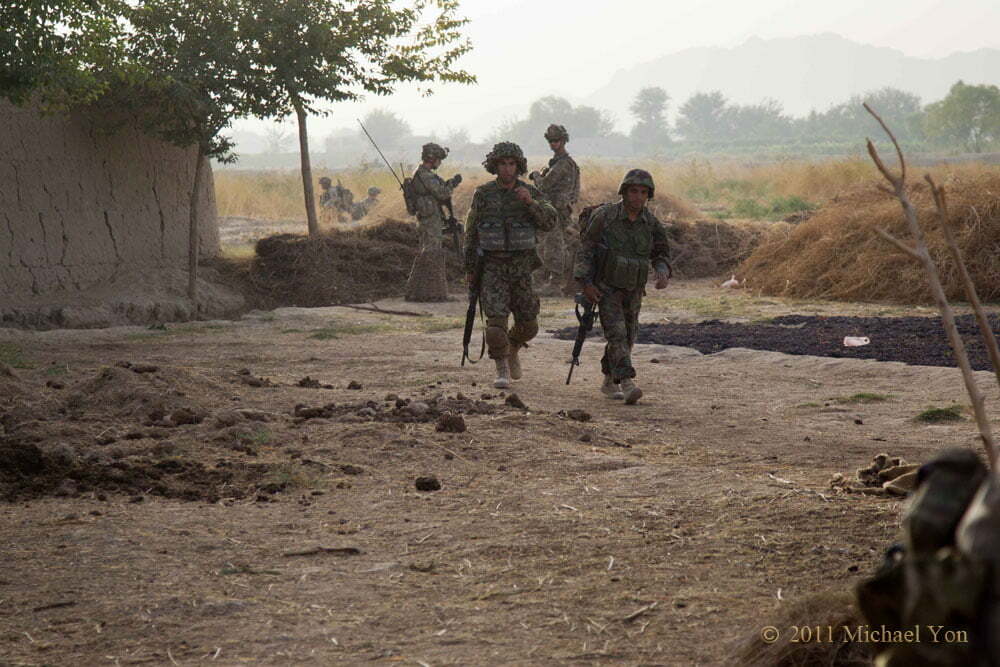 Mission in Afghanistan. Every step is a word in a story.
 Photo credit US Army.
When I was in Special Forces, we trained that only two Soldiers would go to fetch water for the team of twelve men. More people down at the creek left more sign where the enemy is likely to cast for spoor, or to catch it by chance.
So the water crew would go around and fetch everyone’s canteens, which you tied to parachute cord and filled. Every time they walked to the water, they took a slightly different route to avoid tramping down an obvious path. Trackers cast along water.
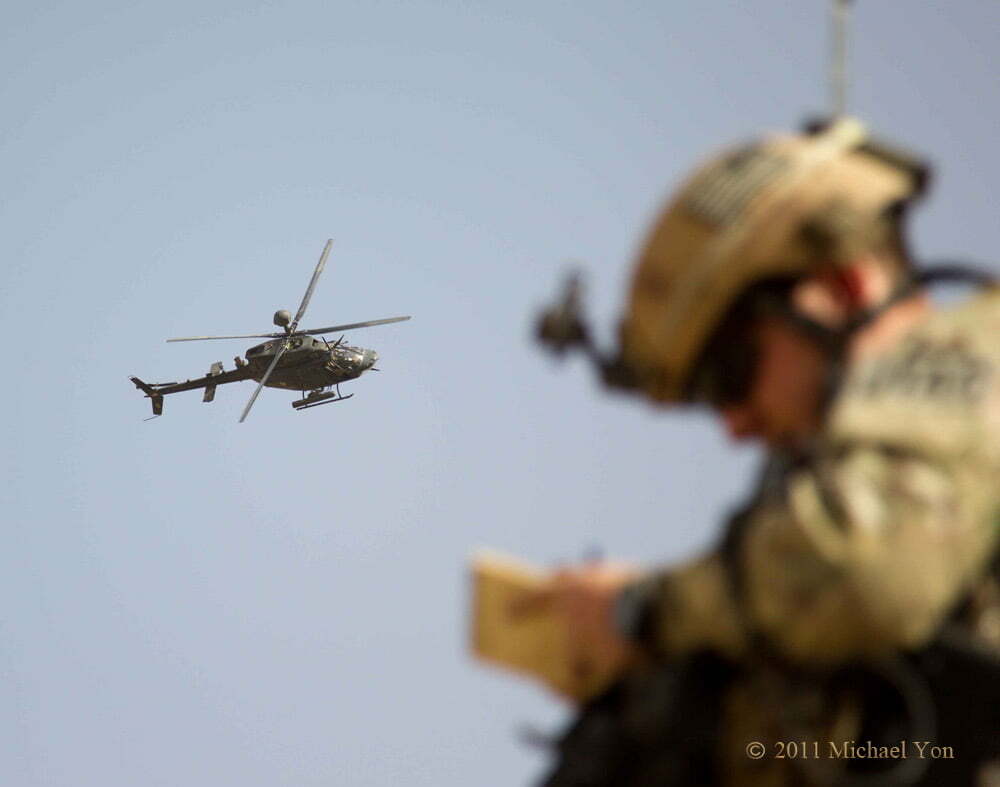 Kiowas could find many start points. Kiowa Wolfpacks could finish many of them without need of ground Wolves.
Last year, in Nimroz Province, Afghanistan, there was an ambush which might have been meant for our small group. I was not with the military. We are unsure who the ambush was for, but it was suspicious with place and timing.
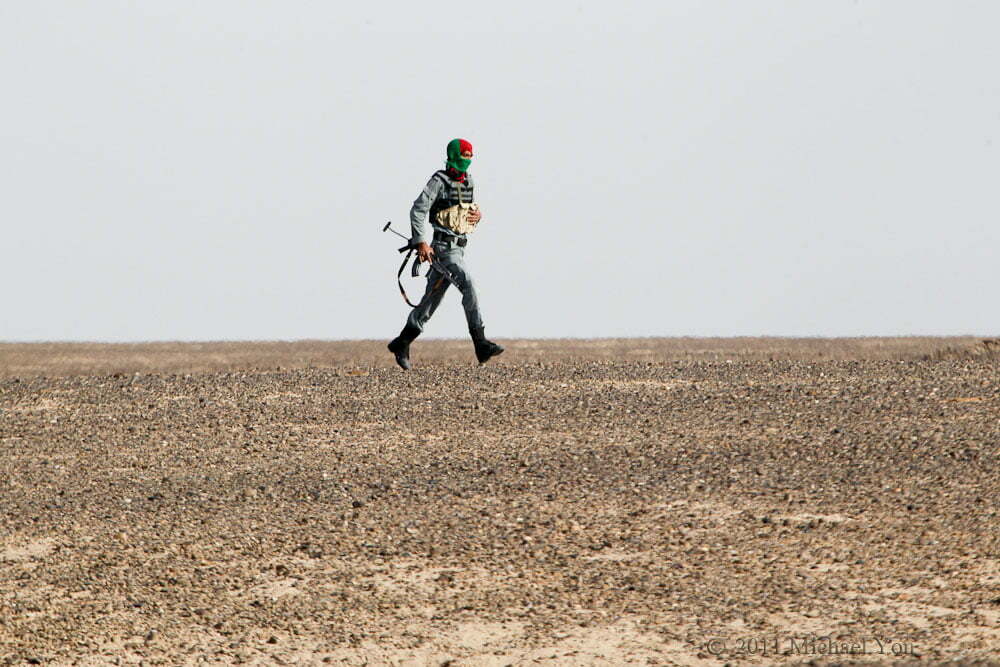 Area of the Nimroz Ambush.
When the ambush kicked off, I was not there. The Afghans tracked and chased the enemy for about fifty miles, as memory serves, before killing most of them.
One was bleeding and got away. The Afghans said he went the direction of the desert, away from the water, and so he would surely die.
I visited the ambush site because it was on the way to a water project I was researching. We are preparing the Afghans to cut off water to a part of Iran, which could lead to a water war. That is a story that I never told. It deserves a major piece. As for combat, it was a perfect situation for a Wolfpack response.
The enemy cone of travel was known. They headed south, in the opposite direction of the ambush.
To their right (east) was the Iranian border. They could not cross there. To their south and west was desert. It was an easy track and pursuit. Afghan forces finally pushed the enemy into a firefight.
That was a great track that I sadly missed, and only got to see the evidence, photographs, and hear the accounts. Unfortunately, the Police chief who was in charge was killed last week (December 2012) in another ambush.
The Afghans Wolfpacked them with Toyota pickups instead of helicopters or jets.
 Trackers can often determine some of the gear that is being carried. Natives often do not make good combat trackers. For example, even a great native tracker will not know what weapon made the marks on the ground. CTs should be combat troops.
Some of the most interesting contacts unfold when skilled trackers are hunting other skilled trackers. When CTs are hunting men who know nothing about tracking, the stories are less interesting. It is more like following cattle.
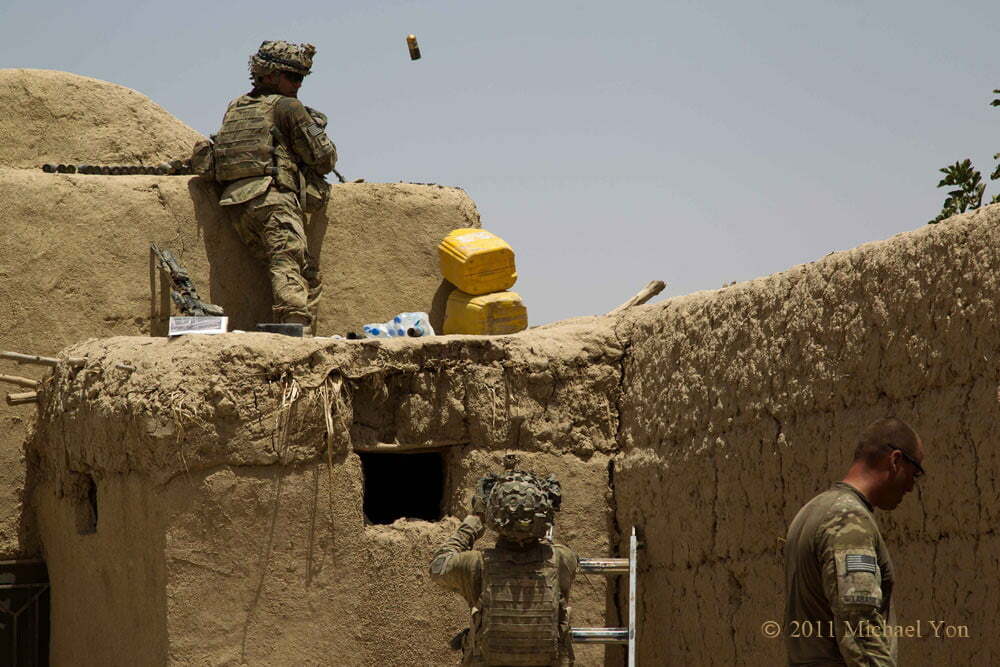 Ammo resupply after a deadly firefight last year.
Tracker against tracker can read more like Tom Clancy submarine warfare. Every trick has a counter, and a counter-counter, and often the roles reverse and the hunter becomes the hunted.
It does not matter how stealthy the hunter/quarry. Both still leave sign, and when they go “active,” such as firing or launching a torpedo, action speeds up.
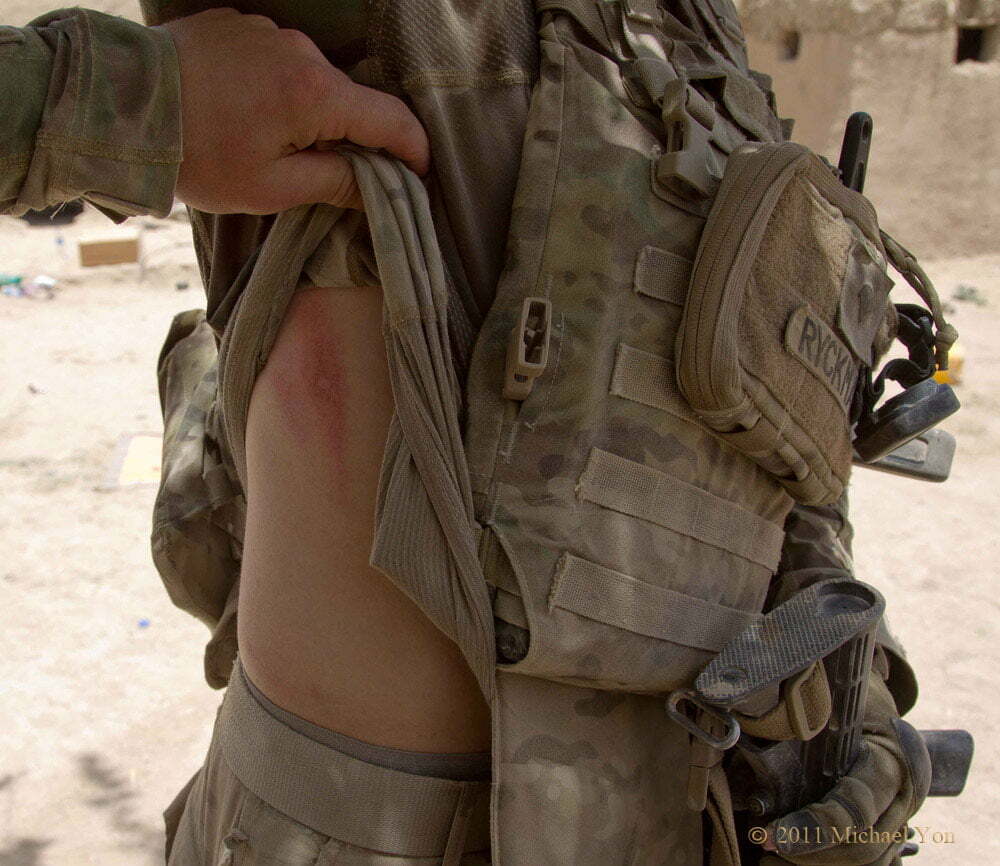 Shot in the ribs and saved by body armor. Another Soldier was killed in this firefight. The enemy was close but we had no way to track them.
The US military can remain in denial about the criticality of combat tracking. For many of our enemies, is as common sense as marksmanship.
Stay tuned for Wolfpack 106


No comment yet, add your voice below!